

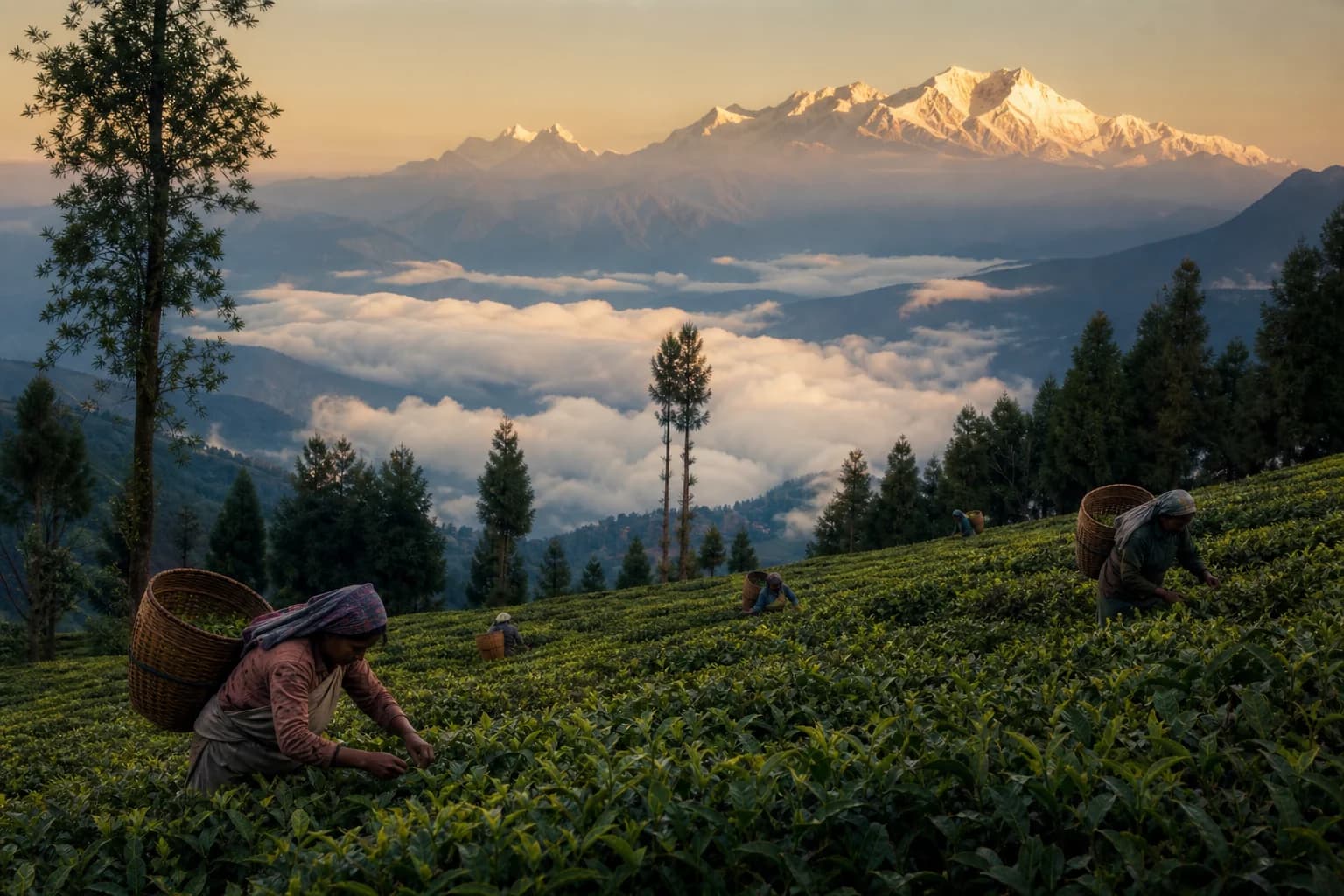
Darjeeling — Tea Hills of the Himalayas
Misty tea-garden hills below the Himalayas, shaped by more than a century of tea cultivation and mountain community life.
What Makes This Place Distinctive
Darjeeling's terraced tea gardens climb the lower Himalayan foothills, producing some of the world's most prized tea since the 19th century. Gorkha, Lepcha and Bhutia communities, tea-garden workers and a historic toy train together shape the character of this hill town.
Historic & Cultural Heritage
Established as a colonial-era hill station and tea district in the 1800s, Darjeeling's railway, tea estates and hill-town architecture form a distinct layered heritage landscape.
Arts, Traditions & Everyday Life
A multi-ethnic hill culture shaped by Gorkha, Lepcha, Bhutia and Nepali communities, expressed through language, Buddhist and Hindu festivals, and folk music traditions.
Who Shapes This Destination
Tea-garden workers, mountain guides and multi-generational hill families sustain both the tea economy and the everyday cultural life of the town.
Traditional Crafts & Makers
Tea processing craftsmanship itself — plucking, withering, rolling and oxidation — is a skilled traditional practice, alongside Tibetan-influenced weaving and woodcraft in nearby monasteries.
Local Foodways & Markets
Himalayan hill cuisine including momos, thukpa and locally grown tea, reflecting Nepali, Tibetan and Bengali culinary influences.
The Physical & Ecological Context
Steep terraced tea-garden hillsides at altitude, framed by views of the Kanchenjunga range, forming one of India's most recognisable mountain agricultural landscapes.
Practices That Continue Today
Tea cultivation and hand-processing techniques, monastic prayer traditions and hill-market trading customs continue as part of daily life.
How This Place Is Changing
Climate pressures on tea yields and a shift toward organic and specialty tea production are reshaping the economics of Darjeeling's tea gardens today.
What a Visit Involves
- Tea garden walks and tea-tasting sessions
- Sunrise views of Kanchenjunga from Tiger Hill
- Darjeeling Himalayan Railway (toy train) heritage ride
- Visits to local monasteries and hill markets
The Challenges
Fair wages and working conditions for tea-garden labour
Climate impact on tea quality and yield
Infrastructure strain from seasonal tourist inflow
Where Can the Destination Grow?
Tea-garden experiences that include worker perspectives, not just tasting
Support for organic and fair-trade tea initiatives
Community-led hill walks and homestay experiences
These represent potential and opportunity where appropriate — not a guarantee that every visit produces these outcomes.
“Darjeeling shows how an agricultural product, a landscape and a multi-ethnic mountain culture can be deeply intertwined, requiring tourism that respects both the workers and the ecology behind the tea.”
Understanding This Place Comes First.
Uddharsha uses destination understanding as the foundation for how tourism here is designed — with care for culture, communities, heritage and environment.
Explore Responsible & Regenerative TourismUnderstand the Place. Then Experience It.
Explore this destination through its people, heritage, culture and living traditions.