

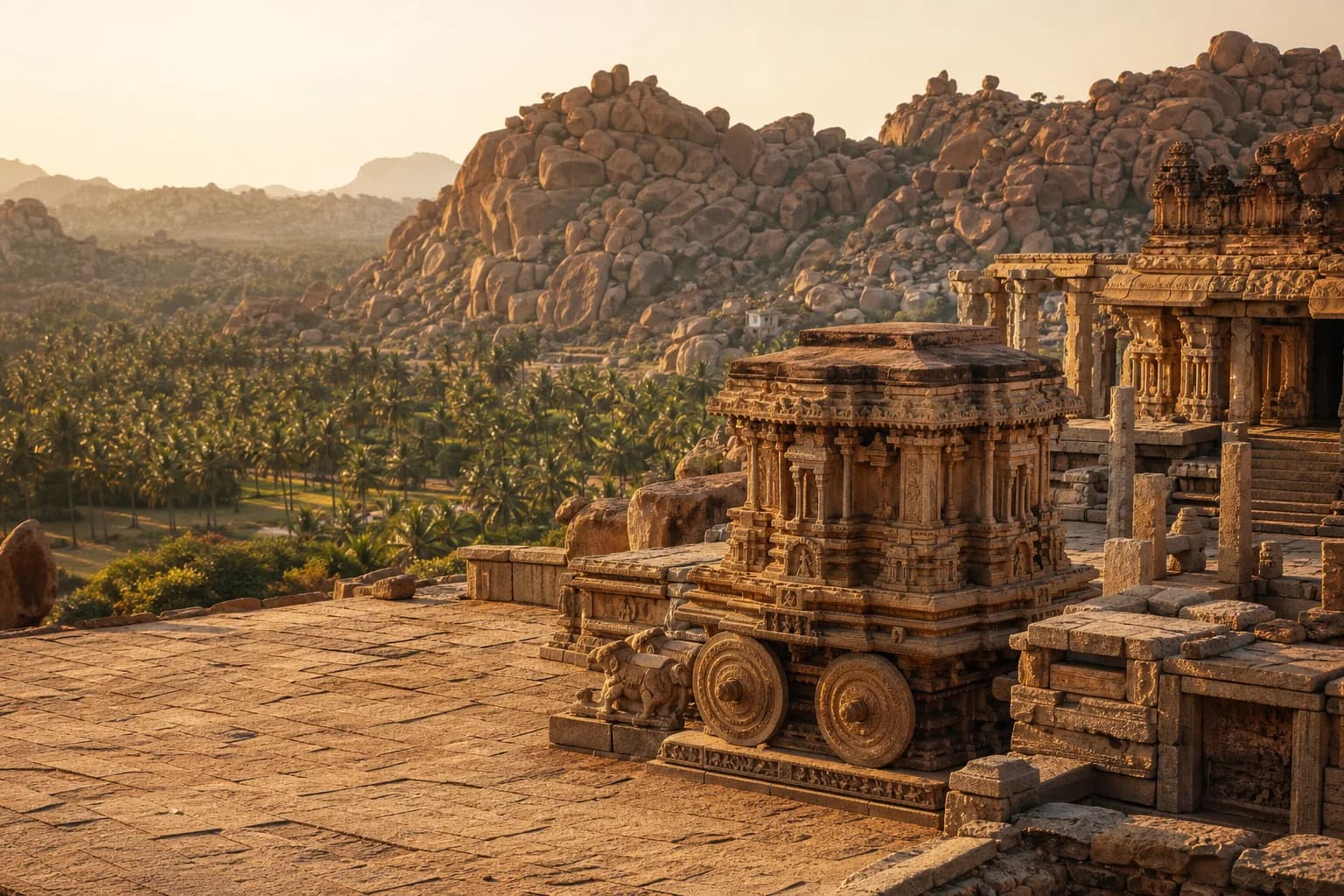
Hampi — Echoes of an Empire
The ruined capital of the Vijayanagara Empire, where carved temples and royal structures rise from a boulder-strewn landscape.
What Makes This Place Distinctive
Hampi was once the capital of the Vijayanagara Empire, one of the largest cities in the world in the 16th century. Today its temple complexes, royal enclosures and market streets stand among a dramatic landscape of granite boulders on the banks of the Tungabhadra river.
Historic & Cultural Heritage
A UNESCO World Heritage Site, Hampi's temple architecture and royal ruins represent the peak of Vijayanagara-era temple building, sculpture and urban planning between the 14th and 16th centuries.
Arts, Traditions & Everyday Life
Ongoing worship at Virupaksha Temple, seasonal festivals and a strong local tradition of stone-craft knowledge connect present-day Hampi to its imperial past.
Who Shapes This Destination
Local farming and fishing communities live alongside the ruins today, with guides, boatmen and small traders sustaining a modest tourism-linked economy.
Traditional Crafts & Makers
Stone carving knowledge passed down from temple-building traditions, along with local basket and coracle-making craft using natural materials from the riverbanks.
Local Foodways & Markets
Simple Karnataka village fare including ragi mudde, jowar rotis and banana-based dishes, reflecting the surrounding agricultural landscape.
The Physical & Ecological Context
A dramatic terrain of ancient granite boulders, banana plantations and the Tungabhadra river, forming one of India's most distinctive natural and archaeological landscapes.
Practices That Continue Today
Daily worship continues at several temple sites within the ruins, and coracle-boat river crossing remains an everyday mode of transport for local communities.
How This Place Is Changing
Conservation efforts and controlled tourism management are shaping how Hampi balances heritage protection with growing visitor interest.
What a Visit Involves
- Virupaksha Temple and the ancient bazaar street
- Vittala Temple's stone chariot and musical pillars
- Sunset views from Matanga Hill
- Coracle rides across the Tungabhadra river
The Challenges
Conservation pressure from rising visitor numbers
Limited livelihood diversification for local communities
Protecting the boulder landscape alongside the monuments
Where Can the Destination Grow?
Guided heritage walks led by local community members
Responsible river and landscape-based experiences
Support for local craft and small-scale livelihoods
These represent potential and opportunity where appropriate — not a guarantee that every visit produces these outcomes.
“Hampi shows how a historic imperial capital can remain both an active pilgrimage site and a fragile archaeological landscape needing careful stewardship.”
Understanding This Place Comes First.
Uddharsha uses destination understanding as the foundation for how tourism here is designed — with care for culture, communities, heritage and environment.
Explore Responsible & Regenerative TourismUnderstand the Place. Then Experience It.
Explore this destination through its people, heritage, culture and living traditions.