

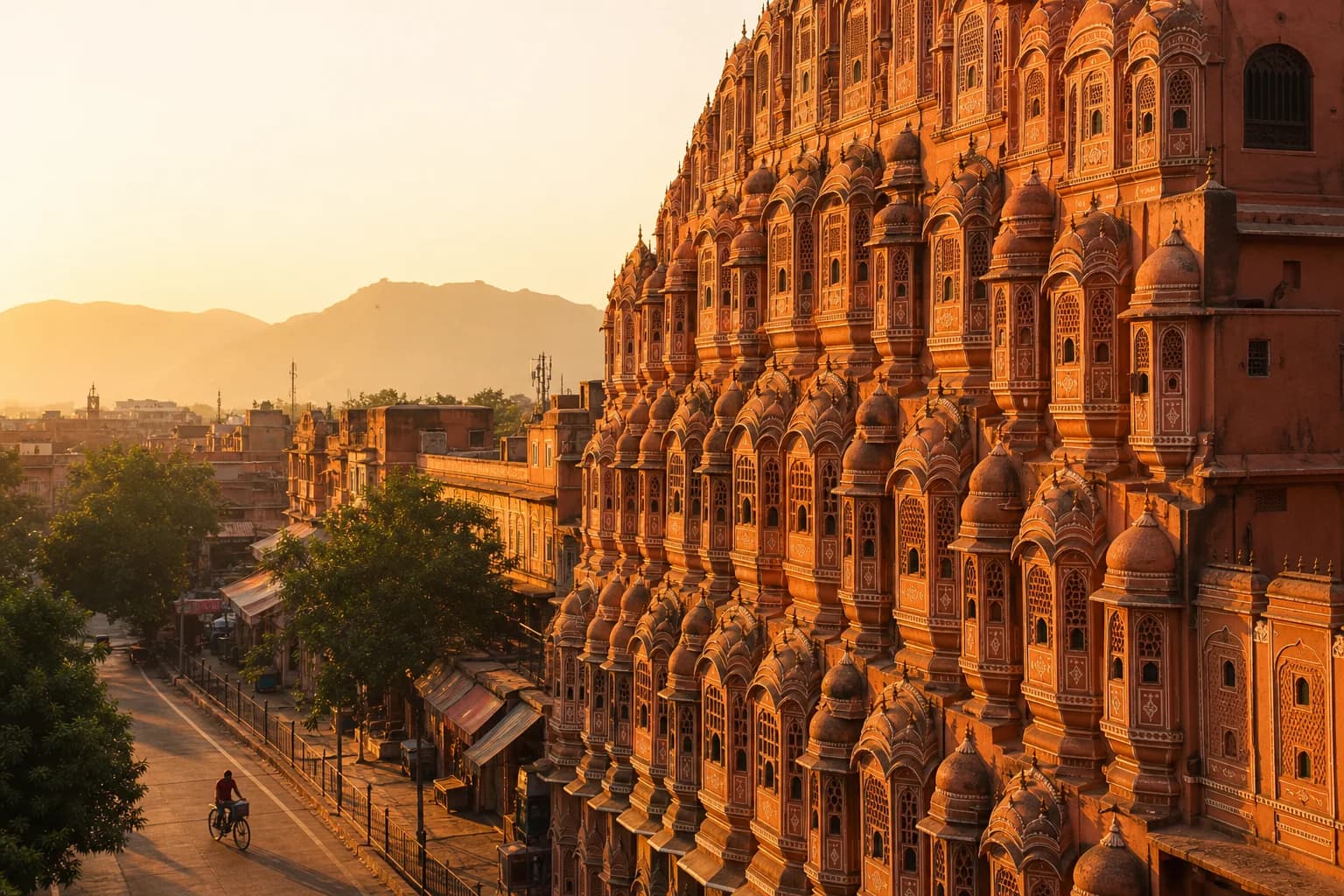
Jaipur — The Pink City
A planned 18th-century capital of pink sandstone forts, palaces and bazaars, still alive with the craft and trade that built it.
What Makes This Place Distinctive
Jaipur was founded in 1727 as a carefully planned capital, its old city painted terracotta pink and laid out on a precise grid. Forts, palaces, observatories and bazaars sit alongside a living economy of jewellery, textile and craft trade that continues inside the walled city today.
Historic & Cultural Heritage
Jaipur's fortified old city, palace complexes and the Jantar Mantar observatory reflect a rare example of deliberate 18th-century urban planning rooted in Rajput architectural and astronomical knowledge.
Arts, Traditions & Everyday Life
Rajasthani music, puppetry, royal festival traditions and a strong bazaar culture of trade and craftsmanship define everyday cultural life across the old city.
Who Shapes This Destination
Merchant families, jewellers, block-printers and royal-lineage custodians of palace heritage together shape the character of Jaipur's old and new city.
Traditional Crafts & Makers
Home to Sanganeri and Bagru block printing, blue pottery, gemstone cutting and traditional Rajasthani jewellery-making, much of it still produced in family workshops within the old city.
Local Foodways & Markets
Rajasthani thali traditions including dal-baati-churma, ghewar and kachori, alongside a strong street-food and sweet-shop culture across the bazaars.
The Physical & Ecological Context
A walled old city on a flat plain ringed by the Aravalli hills, with forts and palaces positioned on surrounding ridgelines overlooking the city.
Practices That Continue Today
Block printing, gemstone craft and jewellery-making continue as active family trades, alongside royal festival customs still observed at the City Palace.
How This Place Is Changing
Jaipur has grown into a major design and craft-export hub, with younger designers collaborating with traditional artisans on contemporary textile and jewellery lines.
What a Visit Involves
- Amber Fort and City Palace heritage walks
- Jantar Mantar astronomical observatory
- Block-printing and gemstone workshops in the old city
- Bazaar walks through Johari and Bapu Bazaar
The Challenges
Congestion and conservation pressure within the walled city
Fair pricing for artisans amid tourist-market competition
Balancing heritage conservation with modern urban growth
Where Can the Destination Grow?
Workshop-based visits directly with block-printing and jewellery families
Heritage walking routes that support old-city livelihoods
Craft documentation and design collaboration opportunities
These represent potential and opportunity where appropriate — not a guarantee that every visit produces these outcomes.
“Jaipur demonstrates how a historic planned city can remain a functioning centre of craft, trade and culture rather than becoming a purely historical backdrop.”
Understanding This Place Comes First.
Uddharsha uses destination understanding as the foundation for how tourism here is designed — with care for culture, communities, heritage and environment.
Explore Responsible & Regenerative TourismUnderstand the Place. Then Experience It.
Explore this destination through its people, heritage, culture and living traditions.