

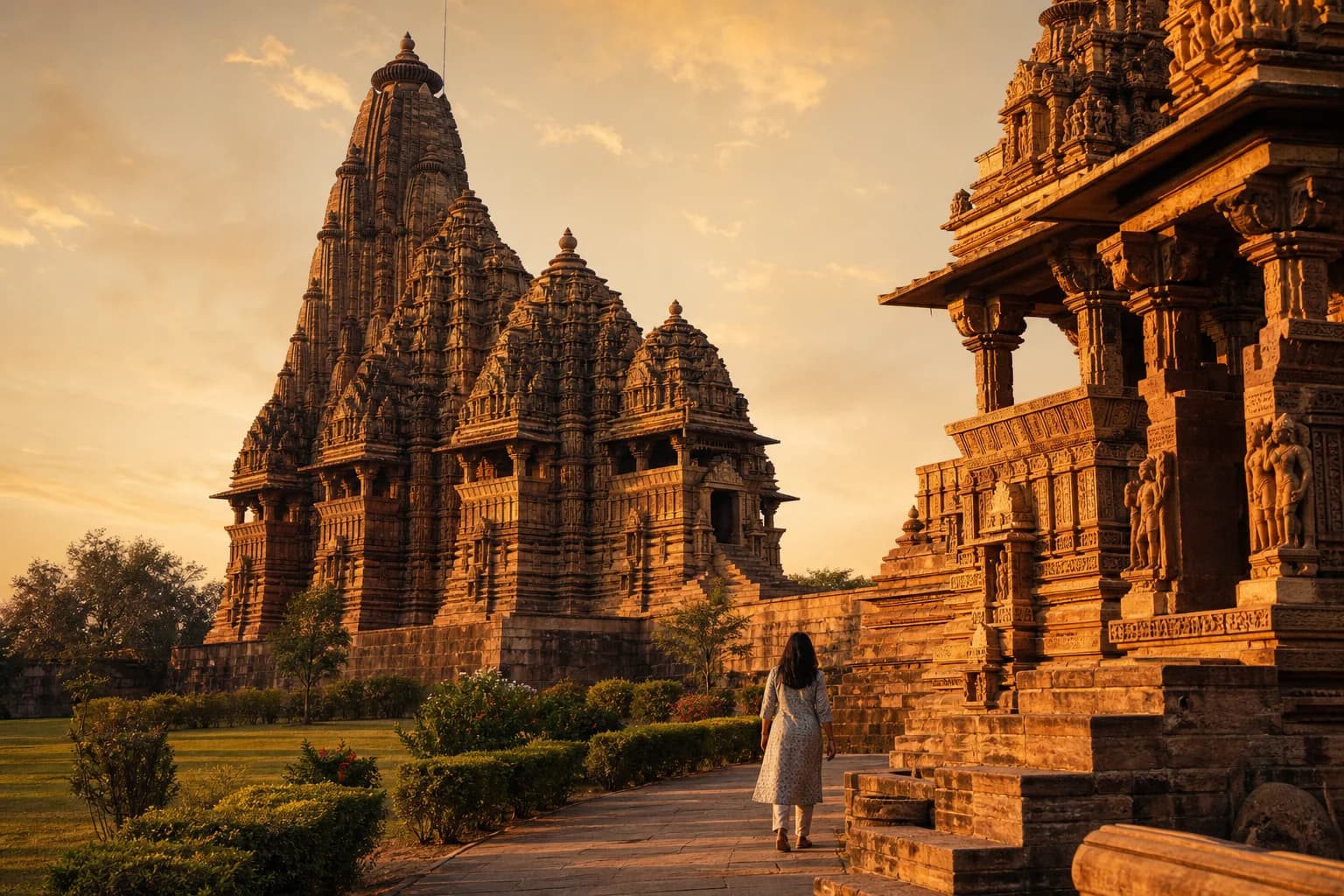
Khajuraho — Poetry in Stone
A thousand-year-old temple town where Chandela-era sculptors carved the full sweep of human and divine life into golden sandstone.
What Makes This Place Distinctive
Khajuraho's temple group, built by the Chandela dynasty between the 9th and 11th centuries, is among the finest achievements of Indian temple architecture. Its sandstone walls carry thousands of sculpted figures — deities, dancers, musicians and scenes of everyday life — celebrated for their extraordinary artistry.
Historic & Cultural Heritage
A UNESCO World Heritage Site, Khajuraho's surviving temples represent the peak of Nagara-style architecture and Chandela-era sculpture, rediscovered in the 19th century after centuries hidden in forest.
Arts, Traditions & Everyday Life
The temples remain a stage for classical dance through the annual Khajuraho festival, connecting the sculpted dancers on the walls with living performance traditions.
Who Shapes This Destination
A small temple-town community of guides, custodians, farmers and craftspeople lives around the monuments, its economy closely tied to heritage visitation.
Traditional Crafts & Makers
Stone-carving knowledge descended from temple-building traditions survives in local workshops producing sandstone sculpture and architectural ornament.
Local Foodways & Markets
Bundelkhandi home cooking — wheat rotis, dal, seasonal greens and local sweets — reflects the agrarian life of the surrounding countryside.
The Physical & Ecological Context
A quiet Bundelkhand plain of farmland and scrub forest, from which the temple spires rise like carved mountains against open sky.
Practices That Continue Today
Worship continues at the Matangeshwar temple within the complex, and classical dance returns to the temples each spring during the festival.
How This Place Is Changing
Improved connectivity is opening Khajuraho to wider cultural tourism, while conservation teams work to protect the delicate carvings from weathering.
What a Visit Involves
- Western Group of Temples including Kandariya Mahadeva
- Sunrise light on the carved sandstone facades
- Evening sound-and-light narration of the Chandela story
- Khajuraho Dance Festival against the temple backdrop (seasonal)
The Challenges
Weathering and conservation of intricate sandstone carving
Seasonal, narrow tourism economy for local residents
Interpreting the temples' iconography with depth and respect
Where Can the Destination Grow?
Dance and performance programming that animates the site
Training local youth as heritage interpreters
Support for descendant stone-carving workshops
These represent potential and opportunity where appropriate — not a guarantee that every visit produces these outcomes.
“Khajuraho shows how sculpture can hold an entire civilisation's worldview in stone — and how living performance can keep a monumental site from becoming a mere relic.”
Understanding This Place Comes First.
Uddharsha uses destination understanding as the foundation for how tourism here is designed — with care for culture, communities, heritage and environment.
Explore Responsible & Regenerative TourismUnderstand the Place. Then Experience It.
Explore this destination through its people, heritage, culture and living traditions.