Kutch — The White Desert
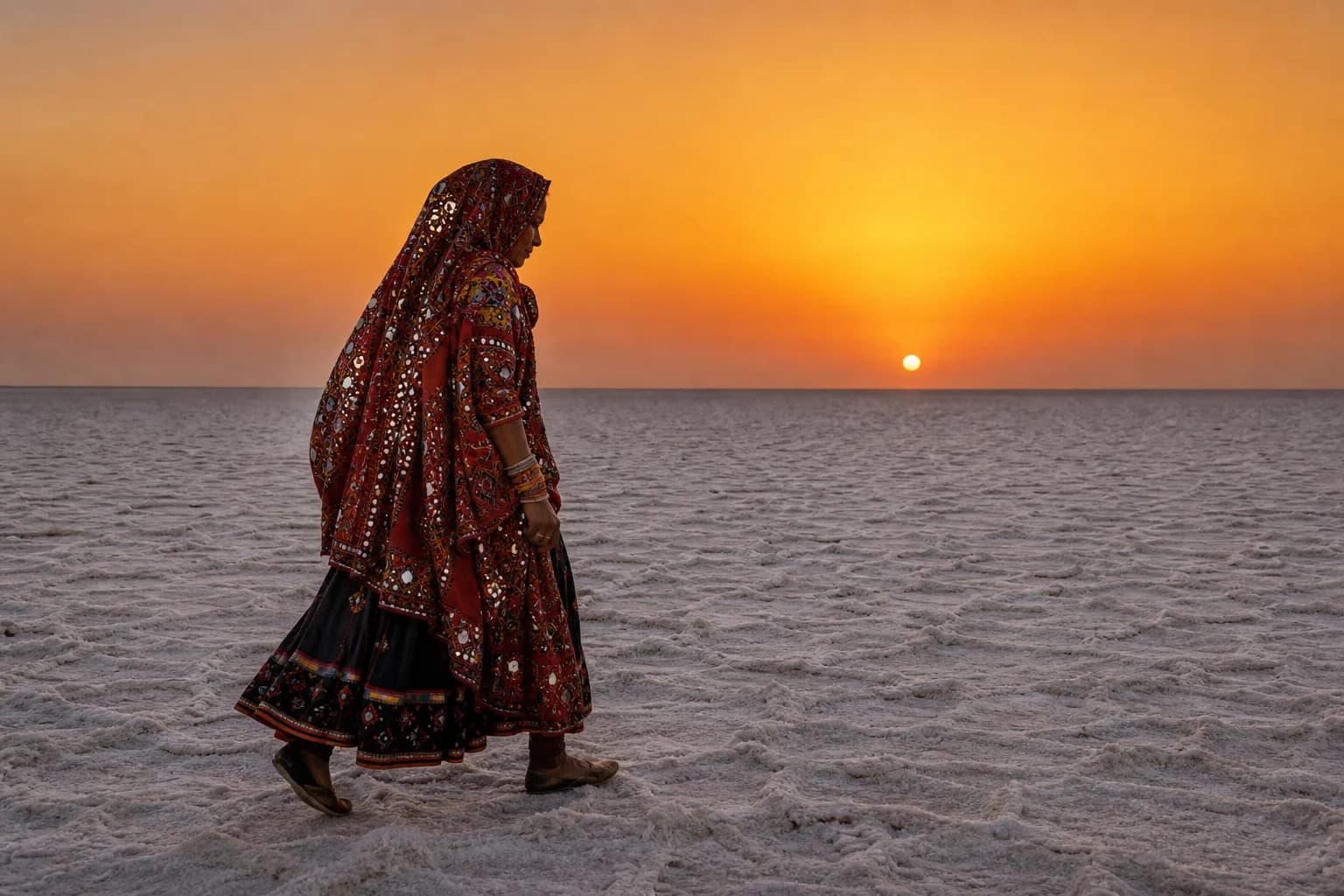
A vast white salt desert bordered by villages where embroidery, mirror-work and pastoral tradition remain deeply alive.
What Makes This Place Distinctive
Kutch is home to the Rann, one of the largest salt deserts in the world, and to a cluster of villages known for exceptional textile and craft traditions. Pastoral communities, salt-pan workers and artisan families together shape a distinct desert culture found nowhere else in India.
Historic & Cultural Heritage
Kutch's craft villages carry centuries-old textile and metalwork lineages, shaped by trade routes connecting Gujarat to Sindh and the wider Indian Ocean world.
Arts, Traditions & Everyday Life
Distinct community identities — Rabari, Meghwal, Ahir and others — express themselves through embroidery styles, jewellery, oral song traditions and festival dress unique to each group.
Who Shapes This Destination
Pastoral herding communities, salt-pan (Agariya) workers and artisan families sustain both the region's desert economy and its craft traditions.
Traditional Crafts & Makers
Kutch is renowned for mirror-work and embroidery, Ajrakh block printing, Rogan art, bell-making and bandhani tie-dye, each tied to a specific community and village.
Local Foodways & Markets
Kutchi cuisine shaped by an arid climate — bajra rotla, dabeli, khichdi and dairy-based dishes suited to pastoral and desert life.
The Physical & Ecological Context
The seasonal salt marsh of the Rann of Kutch, turning into a vast white desert in dry months, bordered by scrubland and craft villages.
Practices That Continue Today
Hand embroidery, natural-dye block printing and salt harvesting continue as everyday livelihoods, passed down within families and communities.
How This Place Is Changing
Craft cooperatives and design collaborations are opening new markets for Kutchi textiles, while Agariya salt workers continue to face difficult working conditions in the Rann.
What a Visit Involves
- White Rann salt desert visit, especially around the full moon
- Village visits to Bhujodi, Nirona and Ajrakhpur craft clusters
- Meeting Rabari and other pastoral community artisans
- Rann Utsav cultural festival experiences (seasonal)
The Challenges
Harsh working conditions for salt-pan (Agariya) communities
Fair pricing and recognition for embroidery and textile artisans
Environmental fragility of the seasonal salt desert ecosystem
Where Can the Destination Grow?
Direct village-based craft experiences with artisan families
Support for salt-worker welfare and fair-trade textile initiatives
Season-sensitive travel planning that protects the Rann ecosystem
These represent potential and opportunity where appropriate — not a guarantee that every visit produces these outcomes.
“Kutch shows how geography, community identity and craft are tightly interwoven, and how tourism here must engage each village on its own terms rather than as a single generic experience.”
Understanding This Place Comes First.
Uddharsha uses destination understanding as the foundation for how tourism here is designed — with care for culture, communities, heritage and environment.
Explore Responsible & Regenerative TourismUnderstand the Place. Then Experience It.
Explore this destination through its people, heritage, culture and living traditions.