

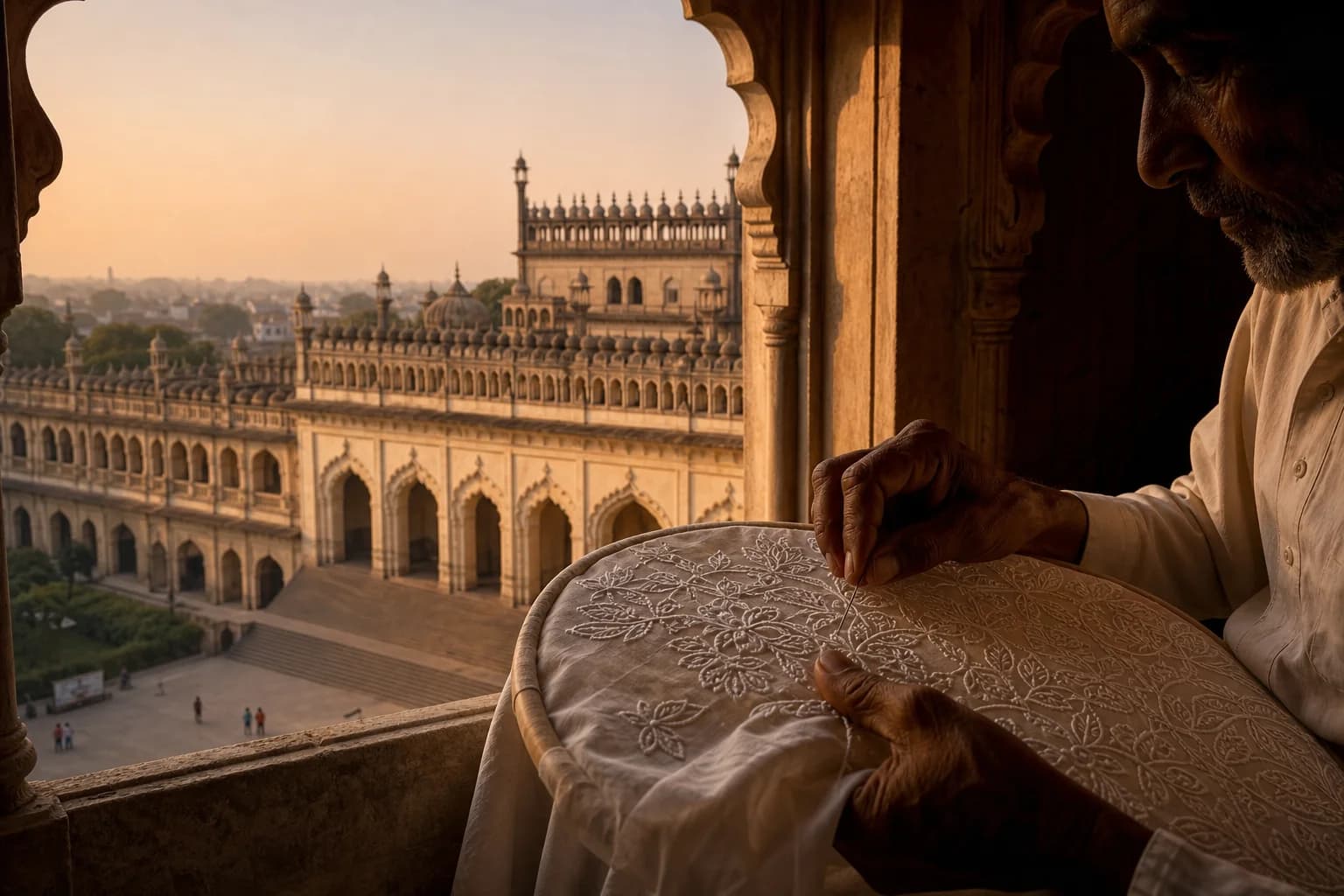
Lucknow — City of Nawabi Grace
Where Awadhi refinement lives on in chikankari embroidery, courtly etiquette, slow-cooked cuisine and the grand arches of the Nawabs.
What Makes This Place Distinctive
Lucknow was the capital of the Nawabs of Awadh, whose patronage shaped a culture of refinement — in language, food, music and craft. The Bara Imambara, Rumi Darwaza and the old Chowk quarter frame a city where chikankari embroidery remains a livelihood for hundreds of thousands of artisans, most of them women.
Historic & Cultural Heritage
Lucknow's imambaras, gateways and colonial-era Residency ruins carry the layered heritage of Awadhi courtly culture and the events of 1857.
Arts, Traditions & Everyday Life
The city's ganga-jamuni tehzeeb — a composite Hindu-Muslim cultural refinement — survives in its Urdu poetry traditions, kathak lineage, etiquette and festival life.
Who Shapes This Destination
Chikankari karigars, kebab-house families, kathak practitioners and old-city traders carry the city's craft and culinary lineages forward.
Traditional Crafts & Makers
Chikankari — fine white-on-white shadow embroidery — is Lucknow's signature craft, practised alongside zardozi metal-thread work and attar (natural perfume) traditions.
Local Foodways & Markets
Awadhi cuisine of galouti and tunday kebabs, dum biryani, nihari-kulcha and sheermal, born of slow-cooking traditions in Nawabi kitchens.
The Physical & Ecological Context
A riverside city on the Gomti, its skyline marked by domes, minarets and gateways rising above dense old-city lanes.
Practices That Continue Today
Hand chikankari embroidery, kathak practice, Urdu mushaira gatherings and Muharram observances at the imambaras continue as living traditions.
How This Place Is Changing
Designer collaborations are bringing chikankari to global fashion, while artisan collectives work to secure fair wages for the largely home-based women embroiderers.
What a Visit Involves
- Bara Imambara, its bhool-bhulaiya labyrinth and Rumi Darwaza
- Chikankari workshops and ateliers in the Chowk quarter
- Awadhi food walk — kebabs, biryani and sheermal
- Evening ganga-jamuni tehzeeb heritage walk through old Lucknow
The Challenges
Low piece-rate wages for home-based embroidery workers
Machine chikan diluting the handmade tradition
Conservation of ageing Nawabi-era monuments
Where Can the Destination Grow?
Atelier visits that connect visitors directly with karigars
Fair-trade chikankari sourcing partnerships
Culinary and heritage walks led by old-city residents
These represent potential and opportunity where appropriate — not a guarantee that every visit produces these outcomes.
“Lucknow shows how courtly patronage created crafts that now sustain vast household economies — and why fair value for hand embroidery matters to an entire city.”
Understanding This Place Comes First.
Uddharsha uses destination understanding as the foundation for how tourism here is designed — with care for culture, communities, heritage and environment.
Explore Responsible & Regenerative TourismUnderstand the Place. Then Experience It.
Explore this destination through its people, heritage, culture and living traditions.