

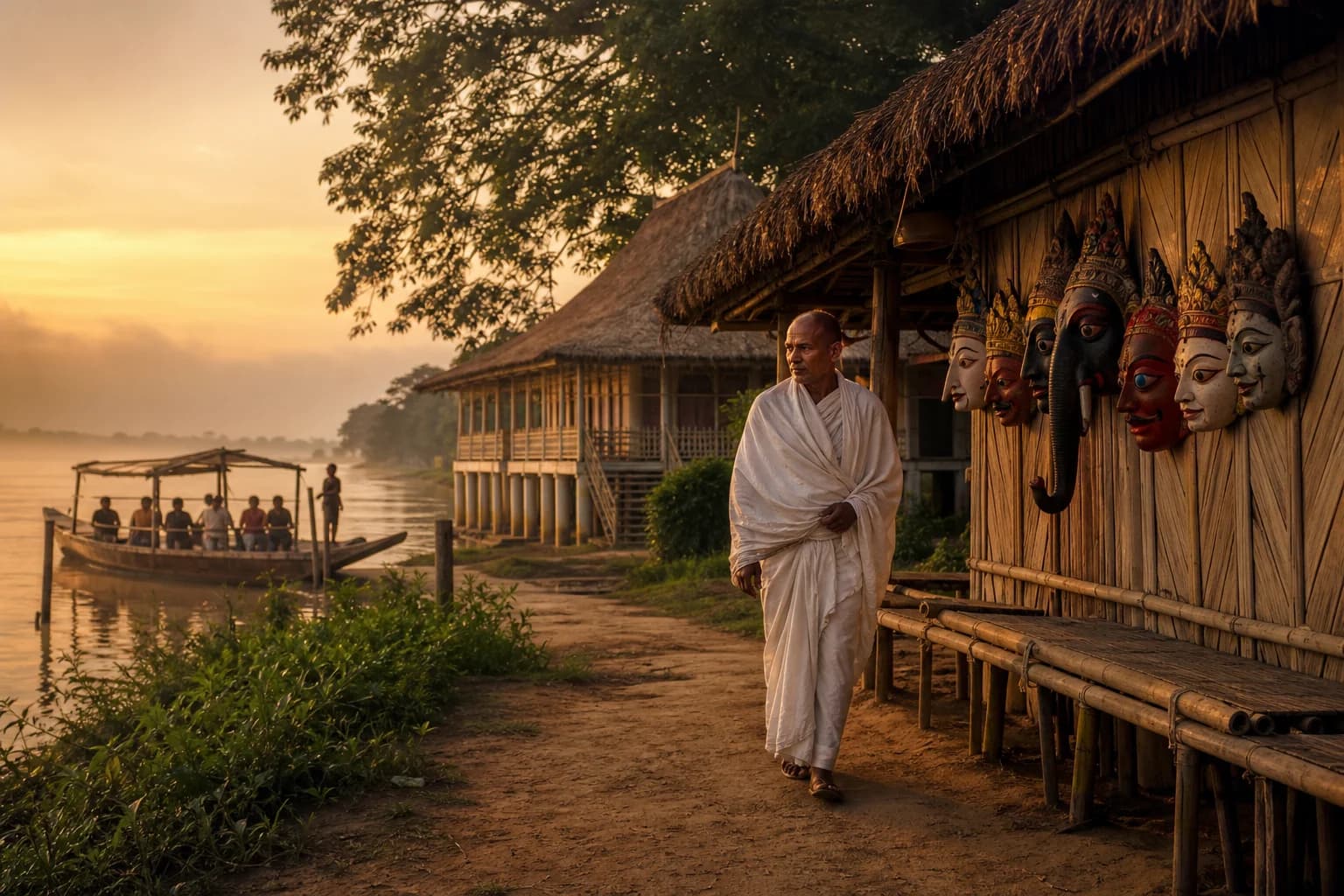
Majuli — River Island of the Sattras
One of the world's largest river islands, where Vaishnavite monasteries keep alive five centuries of devotional dance, drama and mask-making on the shifting Brahmaputra.
What Makes This Place Distinctive
Majuli, set in the vast braided channels of the Brahmaputra, is the cradle of Assam's neo-Vaishnavite tradition. Its sattras — monastic institutions founded from the 15th century — preserve Sattriya dance, bhaona theatre and a remarkable mask-making craft, all within a wetland landscape of villages, migratory birds and river life.
Historic & Cultural Heritage
Majuli's sattras carry the 15th-century legacy of saint-reformer Srimanta Sankardeva, whose devotional arts unified Assamese culture; Sattriya is now one of India's classical dance forms.
Arts, Traditions & Everyday Life
Monastic prayer cycles, raas festival theatre, community fishing and Mishing tribal weaving traditions coexist on the island's slow, water-bound rhythm.
Who Shapes This Destination
Sattra monks, Mishing and Assamese farming families, boatmen and mask-makers share an island whose life is negotiated each year with the river.
Traditional Crafts & Makers
Traditional mask-making from bamboo, clay and cloth at Samaguri Sattra, Mishing handloom weaving on stilt-house looms, and boat-building and pottery traditions.
Local Foodways & Markets
Assamese and Mishing river cuisine — fish cooked in bamboo, rice beer, pitha rice cakes and wetland greens — shaped entirely by the island's waters and paddies.
The Physical & Ecological Context
A vast, flat river island of paddy fields, wetlands, water meadows and sandbars, remade each monsoon by the Brahmaputra's floods and erosion.
Practices That Continue Today
Daily naam-prasanga prayer in the sattras, the winter raas festival, mask performance traditions and handloom weaving continue as everyday island practice.
How This Place Is Changing
Erosion has shrunk Majuli dramatically, prompting protection efforts and a bid for World Heritage status, while homestay-based tourism grows carefully around sattra life.
What a Visit Involves
- Ferry crossing over the braided Brahmaputra
- Sattriya dance and prayer at Kamalabari and Auniati sattras
- Mask-making workshops at Samaguri Sattra
- Cycle rides through Mishing stilt-house villages and wetlands
The Challenges
Severe riverbank erosion shrinking the island each year
Out-migration of youth from island livelihoods
Keeping mask and manuscript traditions economically viable
Where Can the Destination Grow?
Homestay and sattra-based cultural immersion
Support for mask-making and Mishing weaving livelihoods
Wetland and birdlife experiences guided by islanders
These represent potential and opportunity where appropriate — not a guarantee that every visit produces these outcomes.
“Majuli shows a whole cultural world sustained by monastic institutions on fragile land — a reminder that protecting heritage can be inseparable from protecting the land itself.”
Understanding This Place Comes First.
Uddharsha uses destination understanding as the foundation for how tourism here is designed — with care for culture, communities, heritage and environment.
Explore Responsible & Regenerative TourismUnderstand the Place. Then Experience It.
Explore this destination through its people, heritage, culture and living traditions.