

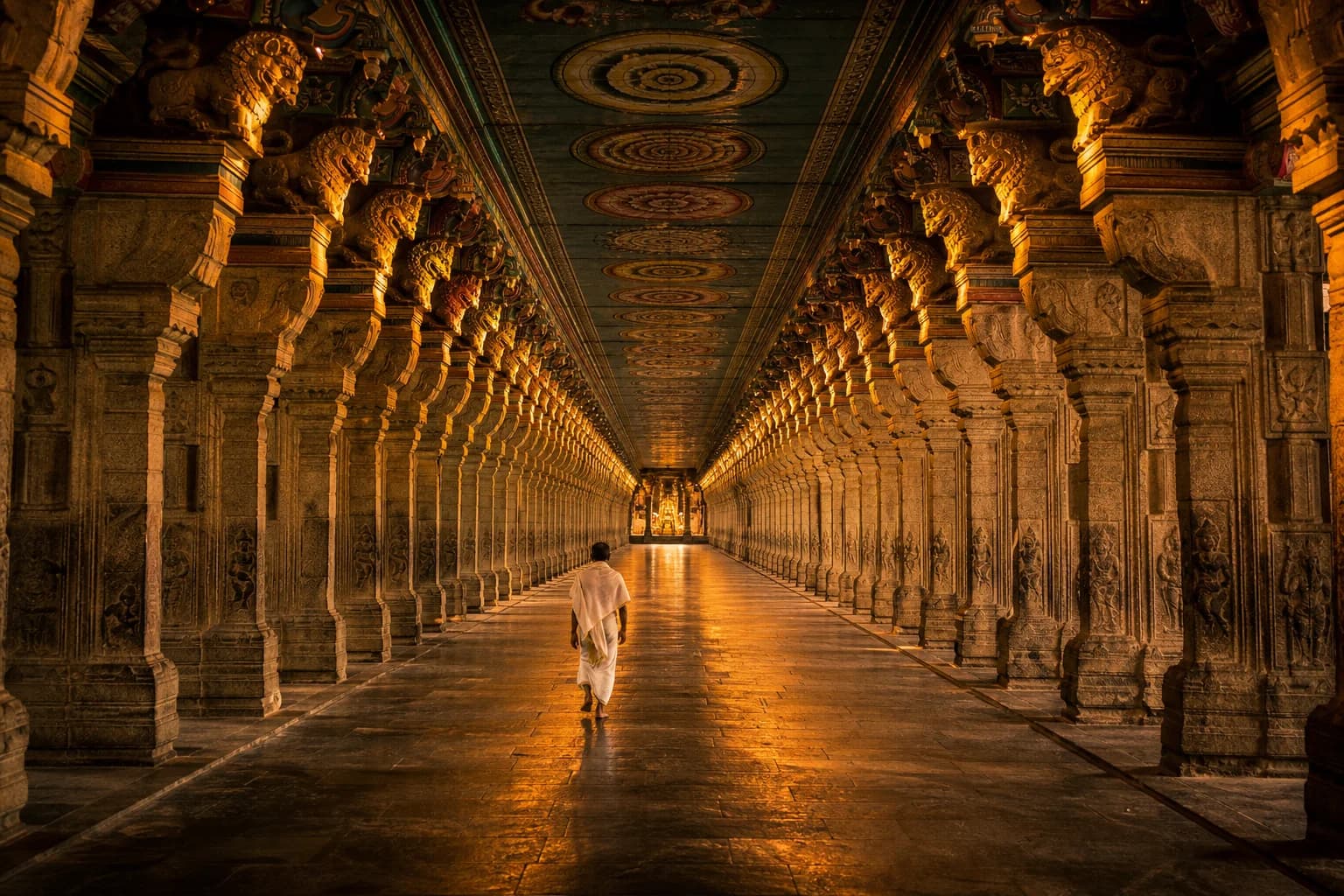
Rameswaram — Island of the Sacred Corridor
A conch-shaped island between India and Sri Lanka, where Rama is said to have worshipped Shiva — home to the longest temple corridor in the world and the ghost dunes of Dhanushkodi.
What Makes This Place Distinctive
Rameswaram floats in the Palk Strait like a stepping stone in the Ramayana's geography — the place where Rama, returning from Lanka, offered worship to Shiva. The Ramanathaswamy temple's third corridor runs nearly two hundred metres of receding painted pillars, and pilgrims bathe at its twenty-two sacred wells, each said to taste different. At the island's tip lie the wind-scoured ruins of Dhanushkodi, a town taken by the 1964 cyclone, where the road simply ends in the sea facing Sri Lanka.
Historic & Cultural Heritage
One of the twelve Jyotirlingas and one of the four Char Dham, Rameswaram fuses Ramayana geography with Dravidian architectural mastery — its corridors raised by the Sethupathi kings of Ramanathapuram.
Arts, Traditions & Everyday Life
Pilgrimage bathing rites, Ramayana recitation traditions and the seafaring culture of the Palk Strait's fishing communities define island life; it is also cherished as the birthplace of Dr A.P.J. Abdul Kalam.
Who Shapes This Destination
Temple priests and theertham attendants, Pamban's fisher families, boatmen and salt-pan workers, and the pilgrim-service community of one of India's holiest small towns.
Traditional Crafts & Makers
Shell and conch craft, palm-leaf weaving of the coastal belt, and the sea-shell ornament traditions serving generations of pilgrims.
Local Foodways & Markets
Coastal Tamil pilgrim fare — pure-vegetarian meals near the temple, and the fishing harbour's seafood traditions beyond the sacred precinct, with Ramanathapuram's distinct chettinad-influenced spicing.
The Physical & Ecological Context
A low coral-fringed island of casuarina, dunes and turquoise shallows, linked to the mainland by the century-old Pamban bridge and ending in the cyclone-swept spit of Dhanushkodi.
Practices That Continue Today
The 22-well bathing sequence, sand-linga worship recalling Rama's own offering, and the annual Thirukalyanam festival continue traditions the epics describe.
How This Place Is Changing
New rail and coastal infrastructure bring rising pilgrim numbers, while Dhanushkodi's fragile dunes and the strait's fisheries face mounting environmental pressure.
What a Visit Involves
- The world's longest temple corridor at Ramanathaswamy
- Ritual bathing at the twenty-two theerthams (sacred wells)
- The ghost town of Dhanushkodi and land's end at Arichal Munai
- Pamban bridge crossings and fishing-harbour mornings
The Challenges
Fragile dune and coral ecosystems under tourism pressure
Cyclone exposure and climate risk on a low-lying island
Sustaining fishing livelihoods amid strait restrictions
Where Can the Destination Grow?
Responsible Dhanushkodi visits with local guides and waste discipline
Fishing-community experiences on the Palk Strait shore
Pilgrimage interpretation linking the island's wells, epics and ecology
These represent potential and opportunity where appropriate — not a guarantee that every visit produces these outcomes.
“Rameswaram closes the Ramayana's sacred map on Indian soil — an island where epic memory, engineering marvels and fishing-village resilience share one narrow strip of sand.”
Understanding This Place Comes First.
Uddharsha uses destination understanding as the foundation for how tourism here is designed — with care for culture, communities, heritage and environment.
Explore Responsible & Regenerative TourismUnderstand the Place. Then Experience It.
Explore this destination through its people, heritage, culture and living traditions.