

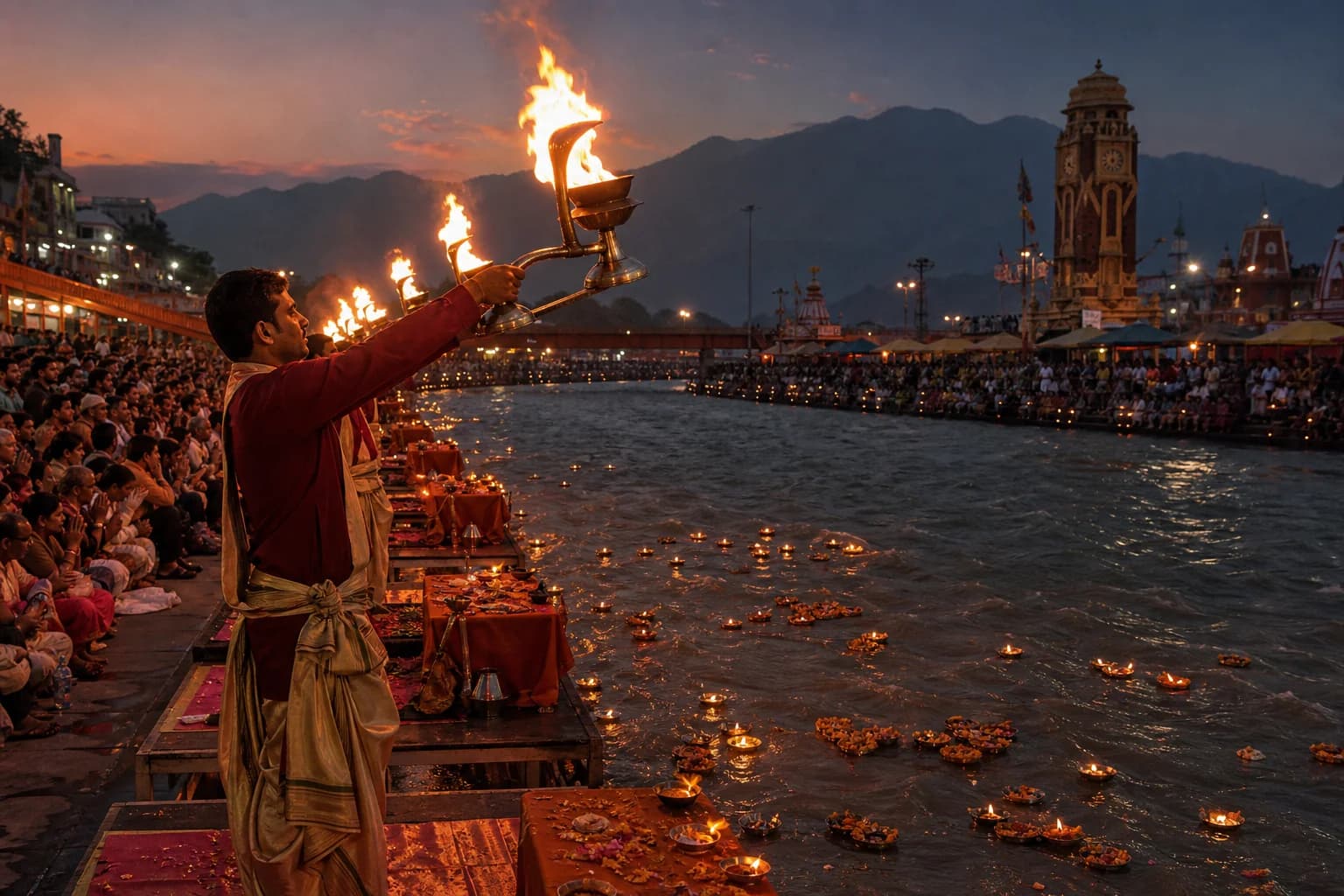
Rishikesh & Haridwar — Gateway of the Ganga
Where the Ganga leaves the Himalaya and enters the plains — twin towns of aarti flames, ashram bells and a river worshipped as a living goddess.
What Makes This Place Distinctive
Haridwar and Rishikesh sit at the threshold between mountain and plain, where the Ganga first touches the great Indian lowlands. Haridwar's Har Ki Pauri hosts one of India's most stirring evening aartis, while Rishikesh — the self-styled yoga capital of the world — strings ashrams, suspension bridges and meditation caves along a jade-green river gorge. Together they form the opening chapter of the Char Dham pilgrimage and a living university of yoga, Vedanta and river devotion.
Historic & Cultural Heritage
Haridwar is one of the four Kumbh Mela cities, its ghats layered with centuries of pilgrimage memory, while Rishikesh's ashrams — including the now-iconic Beatles Ashram — carry the modern global story of yoga's transmission from the Himalaya to the world.
Arts, Traditions & Everyday Life
Daily aarti cycles, kirtan and Vedic chant, yoga lineages and the sannyasi traditions of the Himalayan foothills shape a culture oriented entirely around the river and renunciation.
Who Shapes This Destination
Pandas (hereditary pilgrimage priests), ashram teachers, Garhwali hill families, flower-sellers and boatmen sustain the twin towns' devotional economy.
Traditional Crafts & Makers
Rudraksha and tulsi mala stringing, copper ritual vessels, hand-bound scripture printing and Garhwali woolwork from the surrounding hills.
Local Foodways & Markets
Strictly vegetarian pilgrimage cuisine — ashram thalis, kadhi-chawal, aloo puri at century-old bhandaras and the famous chotiwala eateries — with alcohol and meat absent by sacred custom.
The Physical & Ecological Context
The Ganga emerging from a forested Himalayan gorge into the plains — white-sand river beaches, hill temples and the Rajaji National Park's elephant forests at the towns' edges.
Practices That Continue Today
The evening fire aarti, ritual bathing at the Brahma Kund, guru-shishya yoga instruction and the twelve-yearly Kumbh Mela continue as an unbroken devotional rhythm.
How This Place Is Changing
Global wellness tourism, river-rafting operators and swelling pilgrim numbers press against the towns' fragile riverfront, prompting new conversations about carrying capacity and river health.
What a Visit Involves
- Ganga aarti at Har Ki Pauri as thousands of lamps meet the river
- Sunrise yoga and meditation sessions in Rishikesh ashrams
- Walks across Ram Jhula and Lakshman Jhula suspension bridges
- Kumbh Mela heritage sites and riverside sadhu encampments
The Challenges
River pollution and pressure on the Ganga's ecological health
Overtourism straining ghats, traffic and waste systems
Commercialisation diluting authentic yoga and ashram traditions
Where Can the Destination Grow?
River-stewardship experiences pairing pilgrimage with clean-Ganga action
Authentic ashram immersions guided by established lineages
Off-season and hinterland journeys easing peak pilgrim pressure
These represent potential and opportunity where appropriate — not a guarantee that every visit produces these outcomes.
“These towns show how a river can be the centre of an entire civilisation's spiritual imagination — and why protecting the Ganga is inseparable from protecting the culture built upon her.”
Understanding This Place Comes First.
Uddharsha uses destination understanding as the foundation for how tourism here is designed — with care for culture, communities, heritage and environment.
Explore Responsible & Regenerative TourismUnderstand the Place. Then Experience It.
Explore this destination through its people, heritage, culture and living traditions.