

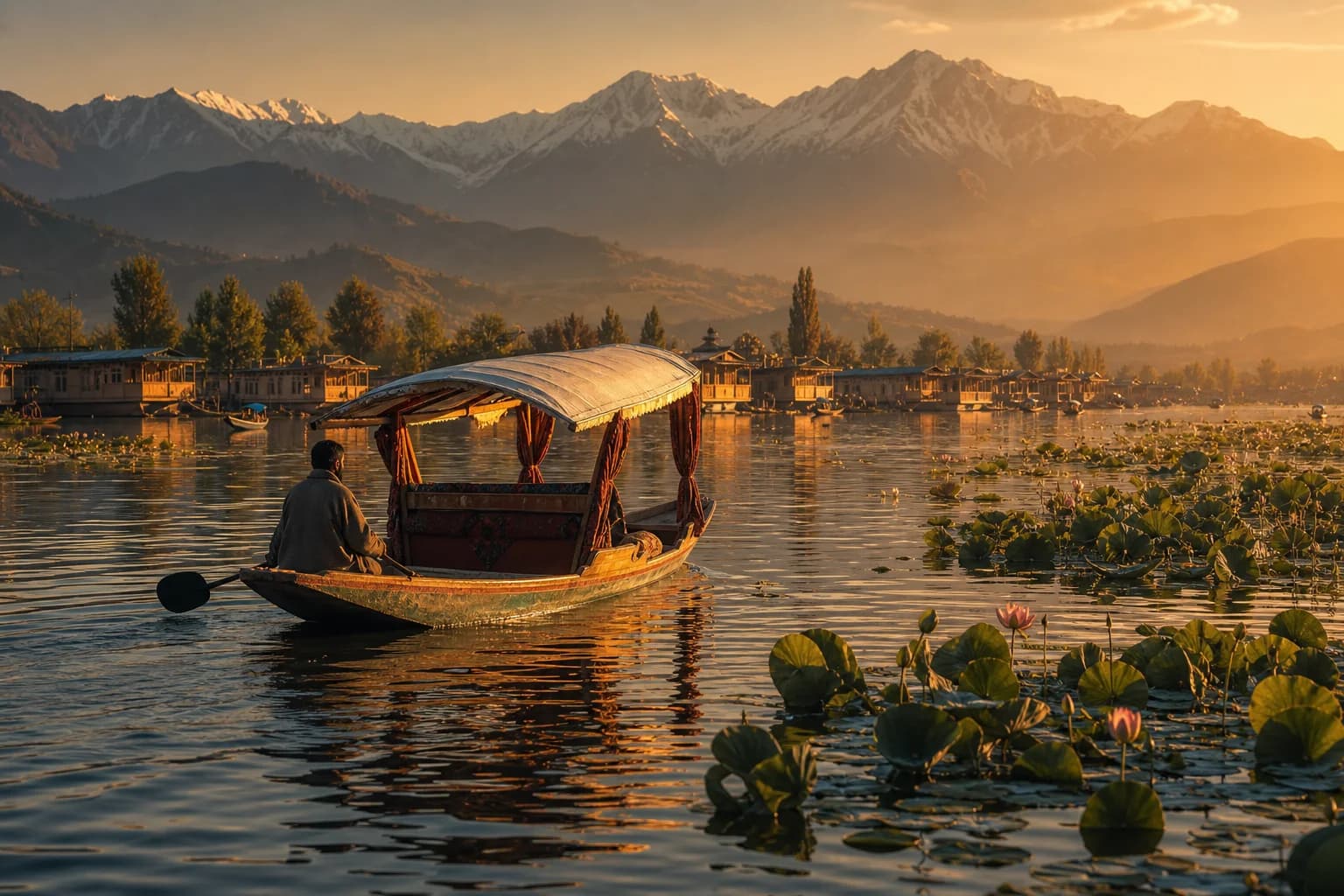
Srinagar — Waters of the Kashmir Valley
A valley city built around water and craft, where shikaras glide across Dal Lake and pashmina, papier-mâché and walnut carving live on in old-city workshops.
What Makes This Place Distinctive
Srinagar sits at the heart of the Kashmir Valley, its life organised around Dal Lake, the Jhelum river and Mughal-era gardens. Houseboats, floating vegetable markets and centuries-old craft quarters make it one of India's most distinctive living cultural landscapes.
Historic & Cultural Heritage
Srinagar's heritage spans Mughal garden design, distinctive wooden mosque and shrine architecture, and a houseboat tradition that grew along its lakes and rivers over centuries of valley life.
Arts, Traditions & Everyday Life
Kashmiri culture is expressed through Sufi shrine traditions, wanwun songs, kahwa and samovar tea culture, and a deep artisan identity woven into the old city's mohallas.
Who Shapes This Destination
Houseboat families, lake farmers, shawl weavers and old-city artisan households sustain both the lake economy and the valley's craft lineages.
Traditional Crafts & Makers
Home to pashmina and kani shawl weaving, papier-mâché, walnut wood carving, chain-stitch embroidery and carpet knotting — among the densest concentrations of living craft in India.
Local Foodways & Markets
Wazwan feast traditions including rogan josh, yakhni and gushtaba, alongside everyday kahwa, noon chai and bakery culture unique to the valley.
The Physical & Ecological Context
A high mountain valley of lakes, waterways, poplar-lined avenues and saffron fields, ringed by the snow peaks of the Pir Panjal and Zabarwan ranges.
Practices That Continue Today
Hand-weaving of pashmina, houseboat craftsmanship, floating agriculture on lake gardens and shrine festival traditions remain part of everyday valley life.
How This Place Is Changing
Younger Kashmiri designers and cooperatives are reconnecting valley crafts with global markets, while GI-tagging efforts work to protect authentic pashmina from imitation.
What a Visit Involves
- Shikara ride and dawn floating vegetable market on Dal Lake
- Mughal gardens of Nishat, Shalimar and Chashme Shahi
- Pashmina weaving and papier-mâché workshops in the old city
- Walks through the wooden mosque and shrine architecture of Downtown Srinagar
The Challenges
Ecological pressure on Dal Lake and its floating gardens
Machine-made imitation undercutting genuine pashmina
Sustaining craft livelihoods through uncertain tourism seasons
Where Can the Destination Grow?
Direct engagement with weaving and papier-mâché households
Responsible lake-based experiences with houseboat families
Support for GI-authenticated Kashmiri craft
These represent potential and opportunity where appropriate — not a guarantee that every visit produces these outcomes.
“Srinagar shows how water, landscape and craft can form a single cultural system — one that depends on fair recognition for artisans and care for its fragile lakes.”
Understanding This Place Comes First.
Uddharsha uses destination understanding as the foundation for how tourism here is designed — with care for culture, communities, heritage and environment.
Explore Responsible & Regenerative TourismUnderstand the Place. Then Experience It.
Explore this destination through its people, heritage, culture and living traditions.