

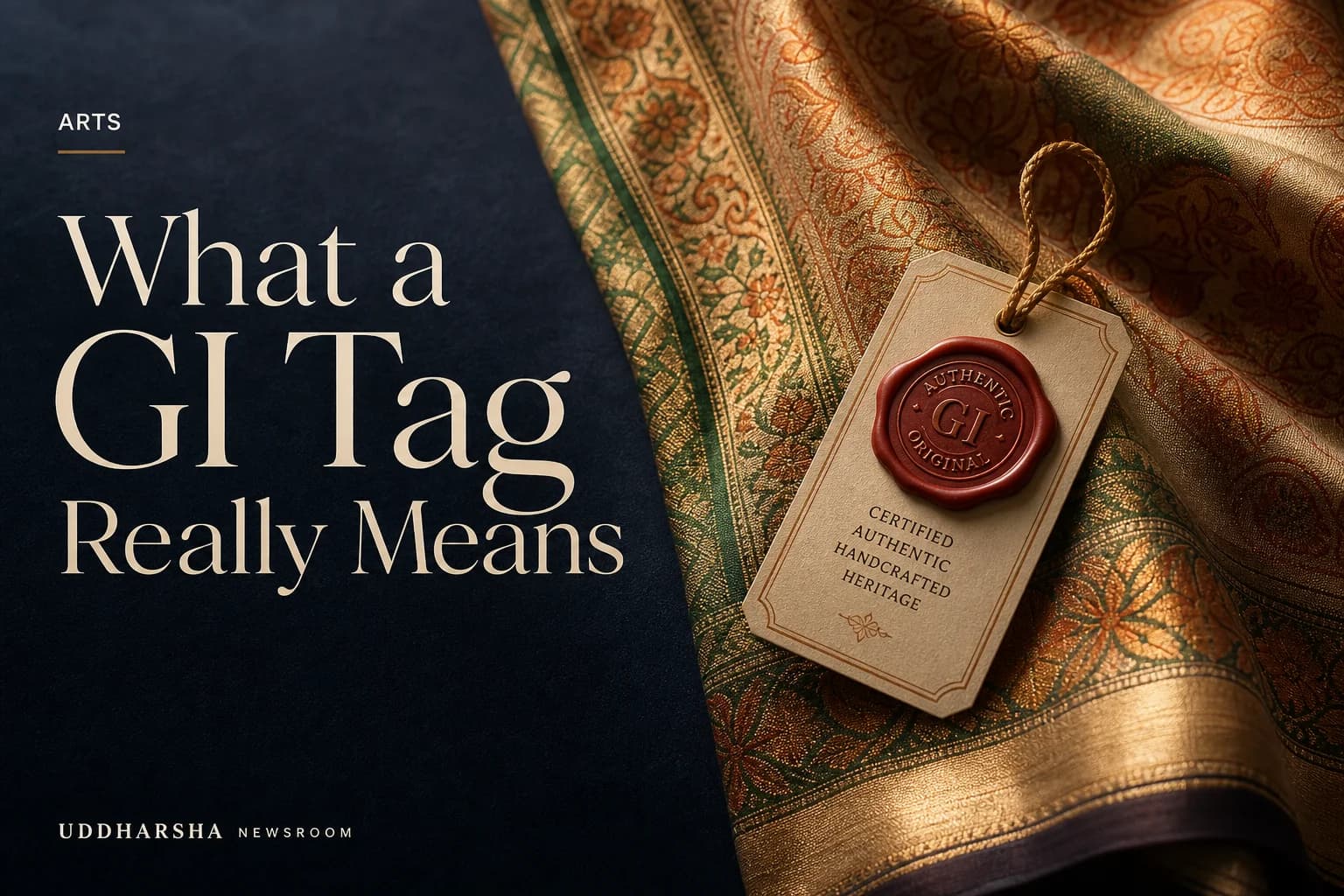
From Kanchipuram silk to Channapatna toys and Madhubani painting, hundreds of Indian crafts now carry Geographical Indication tags. What does that badge actually do for the artisan behind the work?
Walk through any serious craft exhibition in India and you will hear the phrase: GI-tagged. Kanchipuram silk carries one. So do Channapatna toys, Madhubani painting, Blue Pottery of Jaipur, Thanjavur paintings and hundreds of other products rooted in a specific place and tradition.
A Geographical Indication is a form of intellectual property protection, established in India under the Geographical Indications of Goods (Registration and Protection) Act of 1999. It certifies that a product originates from a particular region and owes its distinctive character to that origin — the raw material, the technique, the community of practice that developed it. Darjeeling tea was the first Indian product to receive the tag; crafts and textiles now make up a large share of the register.
For artisans, the tag does three important things. It legally distinguishes the authentic article from imitations — a power-loom copy cannot lawfully be sold under the name of a GI-tagged handloom weave. It converts reputation, built over generations, into a collectively owned asset that no single trader can appropriate. And it gives buyers, in India and abroad, a reliable signal of authenticity in a market flooded with lookalikes.
But practitioners are equally candid about what the tag cannot do on its own. A GI does not market the product, modernise its designs, or raise the price a middleman pays a weaver. Registers do not create demand; customers do. Many GI-tagged crafts still struggle with the same pressures as before — cheap machine-made substitutes, ageing practitioner bases, and young people leaving the craft for steadier work.
The emerging consensus among craft organisations is that a GI tag is a foundation, not a solution. Its value is realised only when paired with the harder work: direct market access for artisans, fair pricing, design collaboration that respects the tradition, and telling the story of the maker to the buyer.
That is the real meaning of the badge. A GI tag protects the name of a tradition. Whether the tradition itself thrives still depends on whether its makers can earn a dignified living from it.
Source & Verification
Editorial analysis by the Uddharsha Editorial Desk, drawing on publicly available reports, registers and data acknowledged below.
- Original Source
- Reference — GI Registry, Government of India
Credits & Acknowledgements
- Written and edited by Uddharsha Editorial Desk, Uddharsha Foundation Newsroom.
Transparency note: sections presented as the Uddharsha Perspective reflect the Foundation's editorial analysis and interpretation. All other reported facts, figures and materials originate from the sources acknowledged above.
Select a topic to discover related coverage across the Uddharsha Newsroom.
Uddharsha Editorial Desk
News • Features • Perspectives
The Uddharsha Editorial Desk reports, documents and interprets developments across India's culture, heritage, tourism, education, arts, communities and wider public life.